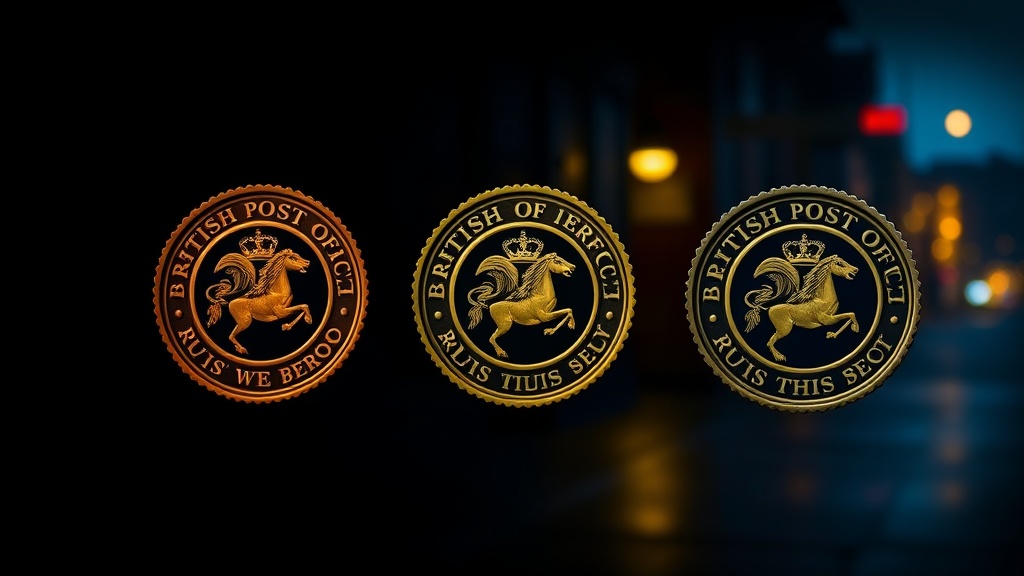
Tracing the Journey of the British Post Office Seals

A clerk in a mid-19th-century London mail room pulls a heavy brass seal from a velvet-lined box, pressing it firmly into a pool of hot, red wax to secure a dispatch. Without that seal, the letter is just a piece of paper; with it, the letter becomes a legal, protected communication. This post explores the history, evolution, and physical properties of British Post Office seals, explaining why these small pieces of wax and metal remain a focal point for collectors of "smalls" and philatelic history.
Understanding these seals isn't just about looking at pretty patterns. It's about the transition from manual security to the standardized postal systems we recognize today. We're looking at the intersection of metallurgy, wax chemistry, and official bureaucracy.
What Are British Post Office Seals Made Of?
British Post Office seals are primarily composed of two distinct elements: the metal signet used to press the design and the wax used to receive the impression. While modern collectors often focus on the stamps themselves, the seals represent the physical security of the mail before the widespread adoption of adhesive postage. Most historical seals used a mixture of beeswax, resin, and pigment—often red or even black—to create a durable, opaque seal.
The metal dies were typically made of bronze or brass, though high-status or official government seals sometimes utilized steel for finer detail. If you're looking at a piece of history, you'll notice that the quality of the metal often dictated how crisp the impression looked. A worn-down bronze die produces a blurry, indistinct image, whereas a well-maintained steel die provides sharp, authoritative lines.
It's a bit like the difference between a modern inkjet printer and a woodblock print. One is a tool for mass production; the other is a tool for a specific, tactile moment of verification. For collectors of small-scale artifacts, this distinction is everything.
The Evolution of Materials
The material composition changed as the postal service became more industrial. Early versions relied heavily on natural resins, which could be brittle. As the 19th century progressed, the introduction of more stable chemical additives allowed for a more consistent seal that wouldn't crack easily during transit. This was a big deal for the reliability of long-distance mail.
- Beeswax-based: Soft, pliable, and common in early 1800s-era pieces.
- Resin-heavy: Harder, more brittle, and used for high-security official dispatches.
- Shellac-based: Became more common as chemical manufacturing advanced.
How Much Are Rare Post Office Seals Worth?
The value of a British Post Office seal depends almost entirely on its rarity, its physical condition, and whether it is a standalone artifact or still attached to a historical document. A loose, high-quality seal from a significant historical period might fetch a premium at specialized auctions, but most collectors find value in the "contextual" price—the value of the seal when it is still part of an original, un-broken letter.
That said, don't expect to see these items listed in every local shop. You'll usually find them in specialized auction houses or through high-end philatelic dealers. The market for "smalls"—which includes items like seals, tokens, and small metal-work—is much more niche than the standard stamp market.
If you're interested in the broader economic value of these items, you might want to look at the history of postage stamps, as the transition from wax seals to adhesive stamps changed the way value was perceived in the postal world. The shift from a physical seal to a printed stamp was a massive technological leap that changed the industry forever.
Here's a breakdown of what drives the price of these items:
| Factor | High Value Impact | Low Value Impact |
|---|---|---|
| Condition | Intact, crisp impression | Cracked, broken, or smudged |
| Documentation | Attached to original letter | Loose or detached piece |
| Official government/royal seal | Standard commercial/postal seal |
Why Do Collectors Focus on Post Office Seals?
Collectors focus on these items because they represent a lost era of tactile security. In a world of digital encryption, there is something profoundly human about a physical piece of wax that proves a message's authenticity. It’s a way to hold a piece of the 19th century in your hand.
Many collectors who specialize in "smalls" find that seals offer a different kind of challenge than stamps. While stamps are often about perfection and grading, seals are about the physical history of the object. You aren't just looking for a clean surface; you're looking for the story of how that seal was applied. Did it crack under the pressure of a heavy transit bag? Was it partially melted by the heat of a summer day in a mail carriage?
The technical side of this is fascinating. The way the wax interacts with the paper and the metal die creates a unique fingerprint for every single letter. No two seals are ever truly identical. This makes every piece a one-of-a-kind artifact, rather than a mass-produced item.
If you're just starting out, you should probably read this guide to building your first collection to understand how to categorize these items alongside your stamps. While they aren't stamps, they share the same historical DNA.
One thing to watch out for is the "fake" or "reproduction" market. Because these seals are visually striking, some unscrupulous dealers sell modern resin-based imitations as genuine historical artifacts. Always check the weight and the scent of the wax. Real historical wax has a specific, slightly organic smell that modern synthetic resins lack. If it smells like a cheap candle, it probably is one.
The complexity of these items is also why they are often overlooked by general collectors. A stamp is easy to identify, but a seal requires a bit more detective work. You have to look at the metal die, the pigment, and the way the wax has aged over a hundred years. It's a much more hands-on way to engage with history.
The British Post Office was an incredibly structured organization. Every level of communication had its own level of verification. From the local postmaster to the high-ranking officials in London, the seals acted as a visual hierarchy. You could tell at a glance how important a piece of mail was just by looking at the seal's design and complexity. This hierarchy is what makes the study of these items so rewarding for those who enjoy the finer details of history.
The transition from these physical-seal-heavy systems to the more modern, adhesive-focused systems was a turning point. It changed the speed of communication, but it also changed the "feel" of a letter. A letter with a broken seal was a security breach; a letter with a torn stamp was just a damaged item. That distinction is where the drama of the history lies.
For those who want to dive deeper into the physical preservation of these items, understanding how to store them is vital. Moisture and light are the enemies of both paper and wax. If you're looking to protect your current items, you'll find tips on safeguarding your treasures to be quite useful. Wax is particularly sensitive to temperature fluctuations, which can cause the seal to crack or even melt slightly if stored poorly.
The study of British Post Office seals is a deep dive into the very foundations of modern logistics. It’s a niche, but a deeply rewarding one for anyone who appreciates the intersection of art, law, and physical history. Whether you're interested in the metalwork of the dies or the chemistry of the wax, there's a lot to uncover in these small, heavy, and often overlooked pieces of history.