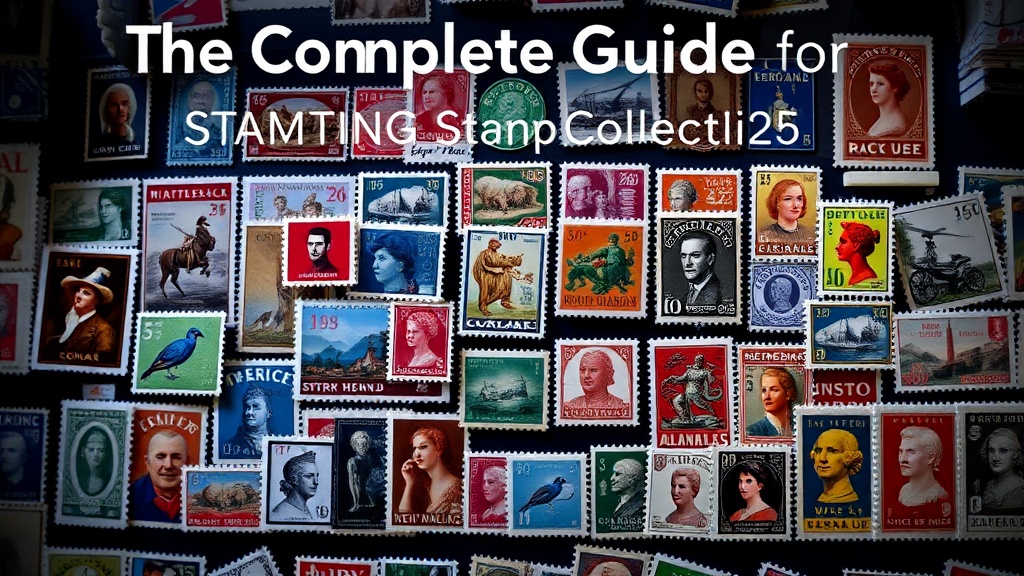
The Complete Guide to Starting Your Stamp Collection in 2025

What Will You Learn About Starting a Stamp Collection?
This guide covers everything needed to begin stamp collecting in 2025 — from choosing a specialty and acquiring stamps to proper storage, authentication, and building real value over time. Whether drawn to historical postal history, artistic miniature designs, or the quiet satisfaction of organized collecting, you'll find practical steps to start smart and avoid common (and expensive) mistakes.
What Supplies Do You Actually Need to Start Collecting Stamps?
You don't need much — a pair of stamp tongs, a stockbook or album, and a magnifying glass will get you going for under $50.
Here's the thing: the hobby has a reputation for requiring expensive equipment. That's nonsense. Many seasoned collectors in Philadelphia started with nothing more than an empty shoebox and a library book. The real supplies matter later, when you're handling valuable material.
The Basic Toolkit
- Stamp tongs — Never use fingers. Oils damage paper. The Showgard 4-inch spade-tip tongs run about $12 and last decades.
- Stockbook — A 32-page Lighthouse stockbook with glassine strips costs roughly $25. It's where stamps live before sorting.
- Magnification — A 10x loupe (the Bausch & Lomb Hastings Triplet is the gold standard at $40) reveals paper varieties, perforations, and forgeries.
- Perforation gauge — Stamps that look identical can differ by half a perforation. The Stanley Gibbons Perfometer ($15) solves this.
- Watermark tray — The Heinrich watermark fluid tray with a black background makes watermarks visible without fluid for most stamps.
Worth noting: buy supplies from Amos Advantage or your local stamp shop. Avoid "kit" deals online — they usually include junk you'll replace in six months.
Where Should You Buy Stamps as a Beginner?
Start with reputable dealers, stamp shows, and club auctions — not eBay or random estate sales.
The catch? Everyone wants the "hidden gem" story. The elderly widow selling her husband's collection for pennies. Reality check: that hasn't happened since 1987. Modern scammers know what stamps look valuable. Beginners buying blind online get stuck with damaged, misidentified, or outright fake material.
Reliable Sources for New Collectors
| Source | Best For | Price Range | Caution |
|---|---|---|---|
| Local stamp clubs | Affordable lots, mentorship | $5-$100 | Quality varies — ask questions |
| APS StampStore | Guaranteed genuine material | $10-$500+ | Higher prices than eBay |
| Stamp shows (local/regional) | Bulk purchases, variety | $1-$1000+ | Bring a checklist — impulse buying is real |
| Approved dealers (APS member) | Graded stamps, investment pieces | $50-$10,000+ | Verify membership on stamps.org |
| Estate sales (in person) | Whole collections, albums | $20-$500 | Assume everything needs expert review |
That said, eBay isn't completely off-limits. The trick? Buy only from sellers with 500+ positive feedback and APS membership. Never buy "unsearched" lots — they're searched. By professionals. Before you see them.
How Do You Identify and Organize Your Stamps?
Use the Scott Standard Postage Stamp Catalogue or Stanley Gibbons for identification, then organize by country, topic, or time period — whatever keeps you interested.
Philately (the study of stamps) has a learning curve. But that's the fun part. Every stamp tells a story — printing methods, political history, even espionage during wartime. The Scott Catalogue Volume 1 covers U.S. and selected countries; at $150 new, it's an investment. Start with a used copy or check one out from your library.
Organizational Approaches That Work
- By country — Classic method. Chronological within each nation. Best for completionists.
- By topic — Ships, space, presidents, birds. More flexible. You can collect worldwide without going broke.
- By time period — Pre-1940 material holds value better. Modern stamps? Buy mint sets at post office prices and don't expect appreciation.
Here's the thing about condition — it's everything. A stamp catalogued at $500 might sell for $50 damaged, $200 with minor flaws, or $450 in pristine condition. Learn the grading scale: Superb, Extremely Fine, Very Fine, Fine, Average, Below Average. Most beginner collections hover between Fine and Very Fine. That's normal. Don't overpay for "investment grade" until you can spot the difference yourself.
What Are the Biggest Mistakes New Collectors Make?
Rushing to "complete" sets, neglecting proper storage, and treating every stamp as an investment tops the list.
Philadelphia's stamp clubs see the same pattern annually. Enthusiastic newcomers buy everything. Albums overflow. Then reality hits — most modern stamps aren't rare. They're printed by the billions. The 1980s and 90s were particularly bad decades for overproduction.
Mistakes to Avoid
- Investing in "limited edition" new issues — The USPS prints millions of every stamp. "Limited" means nothing.
- Using the wrong album mounts — Plastic with PVC destroys stamps over decades. Use Prinz mounts or Hawid mounts — both archival-safe.
- Ignoring perforations and watermarks — A 1-cent Benjamin Franklin can be worth $10 or $10,000 depending on subtle differences. The Scott U.S. Specialized Catalogue details these varieties.
- Skipping membership in the American Philatelic Society — At $58 annually, APS membership includes insurance, authentication services, and access to the largest stamp library in America. It's non-negotiable for serious collectors.
Worth noting: humidity kills collections. Philadelphia summers hit 90% humidity. Basements flood. Attics roast. Store albums in a closet on the main floor. Add silica gel packs. Replace them quarterly.
How Much Should You Budget for Your First Year?
Plan $200-$500 for supplies, reference materials, and initial acquisitions — enough to build a meaningful collection without gambling.
That said, you can spend less. Many collectors started with $20 at a local show and built collections worth thousands through trading, patience, and knowledge. The hobby rewards research more than cash.
Sample First-Year Budget
| Category | Conservative | Enthusiast |
|---|---|---|
| Basic supplies | $50 | $150 |
| Reference books/catalogues | $30 (used/library) | $200 (new Scott volumes) |
| Stamps/acquisitions | $100 | $500 |
| Club dues (local + APS) | $75 | $75 |
| Storage upgrades | $25 | $100 |
| Total | $280 | $1,025 |
The catch? It's easy to blow $500 on junk. Start with 19th-century used classics — they're affordable, educational, and genuinely scarce. A used 1851-1857 3-cent Washington (Scott #10-11) runs $15-$50 in decent condition. That's real history. Hold it. Study the engraving. Compare it to modern self-adhesive stamps. The difference — in craftsmanship, in intention — explains why people still collect in a digital age.
What's Next After Your First Hundred Stamps?
Join a local club, exhibit at a small show, and specialize — depth beats breadth in philately.
The Philadelphia area hosts several active clubs, including the Philadelphia Stamp Club (founded 1885) and regional chapters meeting monthly. These aren't stuffy gatherings. They're trades, auctions, and conversations over coffee. Collectors share knowledge because the hobby depends on new blood.
Specialization — picking one area to study deeply — transforms collecting into scholarship. Instead of 10,000 random stamps, you might collect just U.S. 3-cent commemoratives of the 1930s or British Empire definitives printed by De La Rue. Narrow focus means expertise. Expertise means spotting undervalued material others miss.
Exhibiting sounds intimidating. It isn't. Local shows have novice classes. A one-page exhibit — eight to sixteen stamps with commentary — teaches research, writing, and presentation skills. The American Association of Philatelic Exhibitors offers guidance for beginners.
Stamp collecting isn't dead. It's quieter now — no longer the world's most popular hobby, but more sophisticated for those who remain. The community is welcoming. The history is endless. And in a world of digital ephemera, there's something grounding about holding a 150-year-old piece of paper that traveled the world on an envelope.
Start small. Start smart. And welcome to philately.