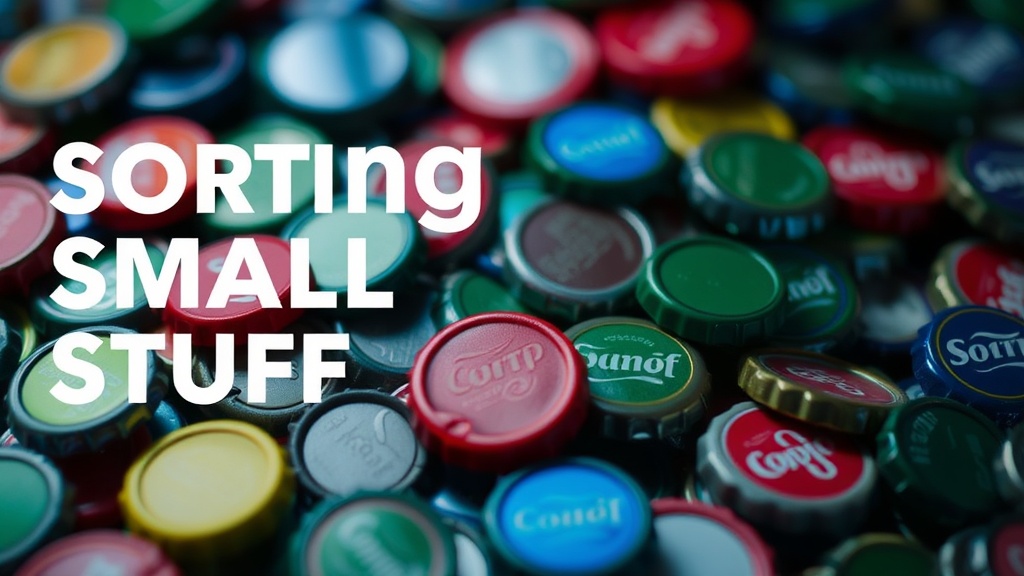
Sorting the Small Stuff: Grading and Organizing Your Soda Cap Find

You're standing at a flea market in South Philly, squinting at a rusty Maxwell House coffee tin. Inside, a sea of jagged metal edges clinks together—a jumble of soda and beer caps from a long-forgotten bottling plant. Most people see trash. You see potential gems from the 1940s. This isn't just about hoarding pieces of tin; it's about preserving a specific slice of graphic design history that fits in the palm of your hand. We're going to talk about how to take that pile of "smalls" and turn it into a legitimate, graded collection without losing your mind or ruining the paint.
What makes a vintage bottle cap valuable?
Before you start scrubbing, you need to know what you're actually holding. Value in the world of crown caps—the technical term for these ruffled little lids—comes down to a mix of scarcity, lithography quality, and the type of liner inside. If you flip a cap over and see a thick disc of actual cork, you've likely found something produced before the mid-1960s. These older caps often carry more weight with collectors because they represent an era before plastic took over the industry. The graphics on these early caps were often printed using a multi-step lithography process that gives them a depth and texture modern ink just can't match.
Brand name matters, but perhaps not in the way you think. While a 1930s Coca-Cola cap is always going to have a market, the real money often hides in the "locals." Think about defunct regional brands like Kayo, Grapette, or Philly’s own Frank’s Soda (specifically the ones with the old "It’s the Best!" slogan). Collectors love these because they weren't produced in the billions like the national giants. If the cap has a sharp, three-color design and the paint isn't bubbling, you've got a winner. You can check the massive database at Crowncaps.info to see if your find is a known rarity or a common warehouse find.
Condition is the final, brutal arbiter of value. A cap with a single "church key" bend down the middle—the result of someone just wanting their drink—can lose 80% of its value instantly. We look for "unpulled" caps, which were never applied to a bottle, or caps that were carefully pried off with a flat-edge tool. If the ruffled edges (the "skirt") are flared out or crushed, it's basically a filler piece until a better one comes along.
How do you clean rust off crown caps without ruining the paint?
Rust is the enemy, but aggression is the enemy’s best friend. I've seen too many rookies dunk a rare 1950s Hires Root Beer cap into a bath of harsh chemicals only to watch the beautiful orange paint slide right off into the drain. Don't do that. The goal is to stabilize the metal, not make it look like it was manufactured yesterday. If you have light "surface bloom"—that orange dust that sits on top of the paint—start with a dry, soft-bristled toothbrush. A gentle circular motion can often whisk away the loose stuff without disturbing the lithography.
For tougher spots, you can use a tiny drop of light machine oil or WD-40 on a cotton swab. Dab the rust spot specifically. Let it sit for ten minutes, then gently wipe it away with a clean cloth. Never, ever use steel wool or abrasive pads. You'll leave micro-scratches that ruin the luster of the paint (and the value of the cap). If the rust has actually "pitted" the metal—meaning there are tiny holes or craters—you have to accept that the cap is in "Fair" condition at best. In those cases, the best you can do is apply a very thin layer of museum-grade wax to stop the oxygen from making things worse.
Soap and water should be used sparingly. If the cap is just greasy or dirty, a quick dip in lukewarm water with a drop of mild dish soap is fine. But you must dry it immediately. I use a hair dryer on the "cool" setting to make sure no moisture is trapped under the skirt or in the cork liner. If you leave a cork-lined cap damp, you're just inviting mold to the party, and that's a smell you'll never get out of your display case.
Where can you find the best storage for small lithographed caps?
Tossing your caps back into a coffee tin is a recipe for disaster. The sharp edges of one cap will scratch the delicate paint of another every time you move the tin. If you're serious about this, you need a system that keeps them stationary. Many collectors use 20-pocket plastic coin pages designed for 2x2 flips. You can slide a cap into each pocket, and because the pockets are clear, you can see the cork or plastic liner on the back without touching the cap itself. It’s a cheap way to keep hundreds of caps organized in a standard three-ring binder.
For the "top shelf" items, I prefer Riker mounts or custom-depth shadow boxes. These use a glass top and a soft polyester batting that gently presses the cap against the glass, keeping it from shifting. It looks professional and keeps the air out. If you want to see what a high-end setup looks like, the Crown Collectors Society International has some great galleries of member displays that will give you plenty of inspiration. Just make sure whatever you use is "archival safe"—you don't want cheap plastics off-gassing and reacting with the vintage lead-based paints on your caps.
Organization is where the fun really begins. Some people sort by category (soda, beer, water), while others sort by color or geography. I like to keep my Philadelphia-bottled caps in their own dedicated display. There's something satisfying about seeing twenty different variations of a local brand's logo evolution over thirty years. It turns a collection of smalls into a visual timeline of local commerce.
The Honest Truth About Grading
Let's talk about the "Grade" you're going to assign these things. Don't lie to yourself. If a cap has a scratch through the main logo, it's not "Near Mint." It's a Grade 3. In my book, a Grade 1 is a factory-fresh, unpulled cap with zero oxidation. Grade 2 has some minor rim wear or maybe a tiny pinhead-sized spot of rust on the skirt. Grade 3 is what most of us find in the wild: visible wear, maybe a slight bend, but the brand is still clear and the colors are decent. Anything below that is a "filler." Keep it until you find a better one, then trade it away. Being honest about condition is the only way to build a collection that actually holds its value over time.
Collecting smalls like this is a test of patience. You’re not looking for a big, flashy neon sign or a massive stoneware crock. You’re looking for a 1-inch circle of metal that tells a story about what people were drinking on a hot Saturday in 1952. It’s a quiet kind of collecting, but when you see a full frame of perfectly preserved caps, it’s just as impactful as any large-scale antique. Pay attention to the details, keep the rust at bay, and for heaven's sake, stop keeping them in coffee tins.