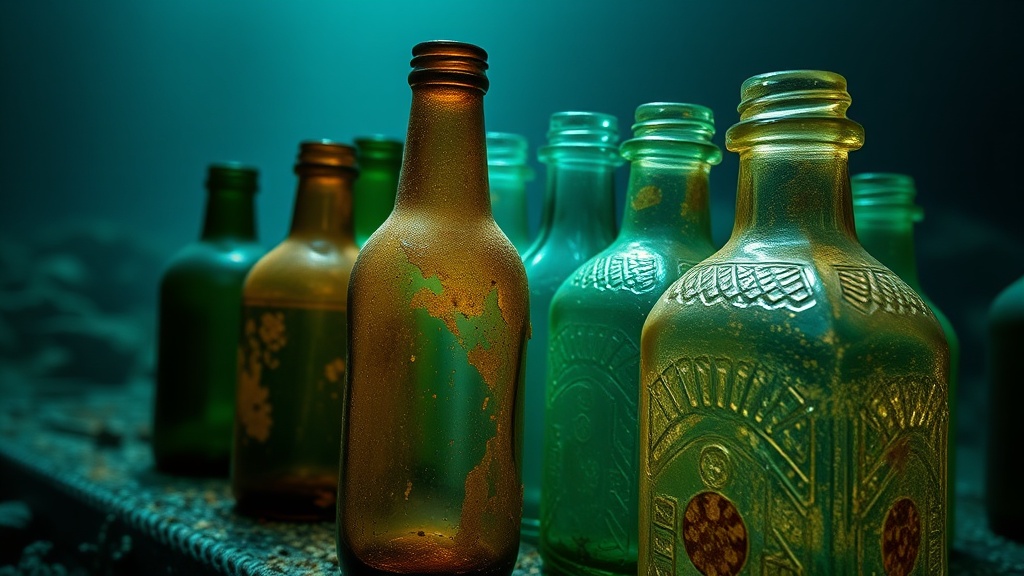
Rare Glass Bottles Found in Shipwrecks

The 18th Century Cognac Decanters
Victorian Apothecary Vials from the Atlantic
Hand-Blown Soda Bottles from Sunken Trade Ships
In this post, you'll learn about the most significant glass bottle discoveries made in recent shipwreck excavations, how to identify high-value maritime finds, and what drives the market value of shipwrecked glass. We're looking at specific historical examples—from medicinal vials to luxury spirits—and the technical reasons why saltwater environments preserve certain types of glass better than others.
Collecting bottles isn't just about finding something pretty on a beach. It's about the history of commerce and the physical evidence of what people consumed hundreds of years ago. When a ship goes down, it creates a time capsule. The sediment often protects the glass from the abrasive action of sand and waves, leaving us with specimens that look almost brand new.
What Makes Shipwrecked Glass Valuable?
The value of shipwrecked glass is primarily driven by its rarity, its historical context, and the physical condition of the specimen. A common green wine bottle from the 1800s might only be worth a few dollars if it's common, but if it comes from a specific, famous wreck like the RMS Titanic or a known Spanish galleon, the provenance changes everything.
Provenance is the key word here. If you can prove a bottle came from a specific wreck through archaeological documentation, the price jumps. Collectors aren't just buying glass; they're buying a piece of a specific historical event. That said, most "sea glass" found by hobbyists isn't actually shipwrecked—it's just weathered glass from coastal erosion. True shipwrecked glass often retains its original color and even its embossed lettering because it was buried under silt.
There are three main factors that dictate the price of these items:
- Age and Era: Bottles from the 17th and 18th centuries are generally more sought after than 19th-century mass-produced items.
- Manufacturer Marks: Embossed names or even subtle mold seams can tell us exactly who made the bottle and where it was intended to go.
- Condition: Saltwater can be brutal. Finding a bottle with an intact stopper or an unchipped rim is a massive win for any serious collector.
It's worth noting that many collectors focus on "patent medicines" found in wrecks. These are often small, uniquely shaped, and highly collectible because they represent the early days of pharmaceutical branding.
What Are the Most Famous Shipwreck Bottle Discoveries?
The most famous discoveries often involve high-status goods like champagne, fine wines, or rare spirits that were being transported to wealthy colonies. These finds often come from well-documented maritime disasters.
One of the most significant sources of high-end glass is the wreckage of the RMS Titanic. While much of the debris is crushed or heavily weathered, certain glass items—including heavy stoneware and thick-walled glass bottles—have survived the descent to the ocean floor. These items provide a glimpse into the luxury dining experience of the early 20th century. The RMS Titanic remains a focal point for maritime historians and collectors alike.
Another incredible source is the Spanish Galleon trade. The 16th and 17th-century wrecks in the Caribbean are goldmines for hand-blown glass. Because these bottles were made by hand, no two are exactly alike. You'll see variations in thickness, color, and the "pontil mark" on the bottom. These are the heavy hitters in the collecting world.
Here is a quick breakdown of common bottle types found in different shipwreck eras:
| Era | Common Bottle Types | Primary Material/Style |
|---|---|---|
| 1600s - 1700s | Wine, Ale, & Medicinal | Hand-blown, thick glass, often green or amber |
| 1800s | Patent Medicine, Bitters, & Soda | Mold-blown, more standardized shapes |
| Early 1900s | Champagne, Luxury Spirits, & Perfume | Machine-made, highly refined, elegant shapes |
I've seen collectors go through years of searching just to find one perfectly preserved 18th-century medicinal vial. It's a game of patience (and a lot of luck).
How Do You Identify Authentic Shipwrecked Glass?
You can identify authentic shipwrecked glass by looking for specific manufacturing characteristics and checking for "sea glass" weathering versus "shipwreck" preservation. Authentic shipwrecked glass often shows a lack of heavy pitting or "frosting" if it was buried in the seabed, whereas standard sea glass is heavily etched by the salt and sand.
First, look at the manufacturing method. If you see a seam running up the side of the bottle, it was likely machine-made or mold-blown in a more modern era (late 1800s or later). If there is no seam, it’s likely hand-blown, which points to an older, more valuable period. Check the base of the bottle for a pontil mark—a rough, scarred spot where the glassblower's rod was detached. This is a huge indicator of age.
Second, check the color. While many bottles are green or brown, the presence of certain "unnatural" colors can be a giveaway. For example, certain cobalt blues were very popular for high-end items in the 1800s. If you find a deep blue bottle with no signs of heavy sand-abrasion, you might have found something special.
A common mistake I see is people assuming any colorful glass found on a beach is a "shipwreck find." That's rarely the case. Most beach-found glass is just recycled glass that has been tumbled by the tide. True shipwrecked glass is often found in "clusters" during professional archaeological dives. If you're serious about this, you should study the archaeology of shipwrecks to understand how items are actually recovered from the seafloor.
- Examine the Seam: No seam usually means older/hand-blown. A seam means newer/machine-made.
- Check the Base: Look for a pontil mark or a circular mold mark.
- Inspect the Color: Deep, saturated colors are often more desirable in certain eras.
- Evaluate the Surface: Is it frosted (sea glass) or smooth (protected shipwreck glass)?
The catch? It's easy to get fooled by high-quality reproductions. Some modern "antique-style" bottles are made to look old, but they won't stand up to a close inspection of the glass's chemical composition or the way the light hits the imperfections.
If you're out in the field, don't just grab anything that looks shiny. Use a magnifying glass. Look for the tiny air bubbles—known as "seeds"—trapped within the glass. These are a hallmark of older, hand-blown production. Modern glass is much more consistent and "clean," which is actually a sign of lower value in the bottle-collecting community.
One thing to keep in mind: if you're diving or searching in protected waters, make sure you're following local laws. Many shipwreck sites are protected under maritime heritage laws, and taking artifacts from them can lead to some pretty heavy fines. It's better to buy from a reputable dealer who can provide documentation than to risk a legal headache.
Whether you're a seasoned collector or just someone who loves a good mystery, there's something undeniably cool about holding a piece of history that has spent a century under the ocean. It's a tangible connection to the past—a piece of a lost world, right in the palm of your hand.