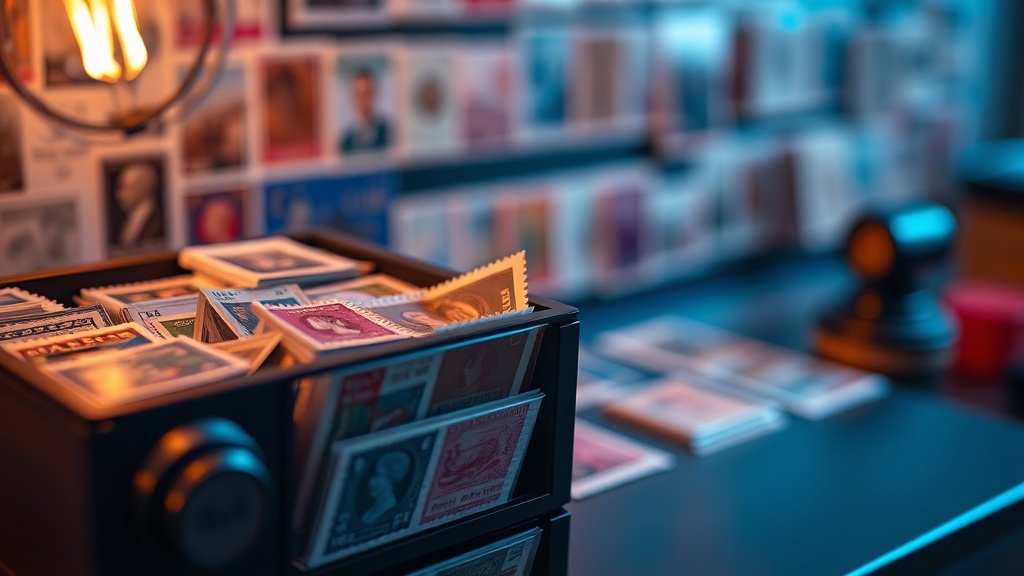
How to Store Your Stamp Collection Safely Without Breaking the Bank

Quick Tip
Always store stamps in acid-free albums away from direct sunlight and high humidity to prevent fading and gum damage.
This post covers practical, budget-friendly stamp storage solutions that protect collections from humidity, light damage, and mishandling. Whether someone has inherited a shoebox of stamps or has spent years acquiring rare issues, proper storage keeps values intact and prevents costly restoration down the road.
What's the Best Way to Store Stamps on a Budget?
Acid-free stock books and glassine envelopes offer the most protection per dollar spent. (Think of them as insurance against creases and foxing.) A standard American Philatelic Society-approved stock book runs about $15 to $25 — far less than the cost of replacing a damaged early issue. You'll want to avoid PVC-based plastics entirely; they off-gas over time and leave stamps sticky or discolored. Polypropylene sleeves are fine, but always check the labeling.
Here's the thing: humidity is the silent enemy. A $5 pack of silica gel packets — the same kind shipped with electronics — tucked into a storage box does wonders. Just recharge them in the oven every few months. That said, don't store stamps in basements or attics. A closet in a climate-controlled living space works better than any fancy cabinet in a damp corner. Even a dresser drawer beats a garage shelf.
Do Stamp Albums or Stock Books Offer Better Protection?
Stock books win for flexibility and cost, while hingeless albums provide the best long-term presentation for high-value sets.
| Storage Type | Best For | Price Range | Downside |
|---|---|---|---|
| Stock Books (Lighthouse, Safe) | Active collecting, duplicates | $12 – $30 | Less visual display appeal |
| Hingeless Albums (Scott, Davo) | Completed series, investment pieces | $40 – $150+ | Higher upfront cost |
| Glassine Envelopes | Individual stamps, sorting | $5 per 100 | No rigidity — needs outer box |
The catch? Albums with stamp hinges can damage gums. For mint stamps — especially post-1940 issues — stock books or hingeless mounts are the safer bet. Many Philadelphia-area dealers swear by Lighthouse stock books for everyday inventory, and Mystic Stamp Company carries them in several sizes.
Can Climate Control Really Save a Stamp Collection?
Yes — stable temperature and humidity prevent paper fibers from expanding, contracting, and attracting mold. The Smithsonian National Postal Museum recommends keeping philatelic material between 65°F and 70°F with relative humidity around 35% to 55%.
You don't need a museum-grade vault. A simple closet hygrometer ($10 on Amazon) lets you monitor conditions. If Philadelphia summers get muggy — and they do — run a dehumidifier in the room. Direct sunlight? Even worse. UV rays fade colors and weaken paper. Store albums inside a closed cabinet or drawer, away from windows.
Worth noting: stamp tongs matter more than most beginners realize. Handling stamps with bare fingers transfers oils that accelerate yellowing. A $3 pair of round-tip tongs — not tweezers, which can pierce — pays for itself immediately. Combine smart tools, simple climate awareness, and affordable archival materials, and a collection stays pristine for decades without draining a wallet.