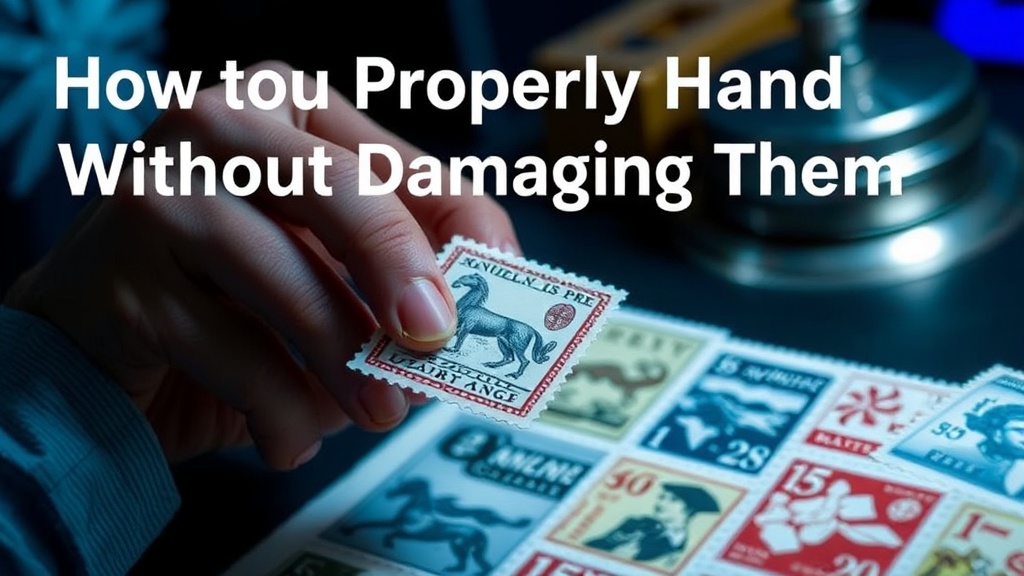
How to Properly Handle Stamps Without Damaging Them

Quick Tip
Always use stamp tongs instead of fingers to handle stamps and prevent oil damage.
What Tools Do You Need to Handle Stamps Safely?
You'll need four items: stamp tongs, a magnifying glass, a stockbook or album, and proper lighting. That's it. The Smithsonian's philatelic collection recommends these basics for any serious collector — and even hobbyists benefit from having the right gear.
Should You Touch Stamps With Your Bare Hands?
No. Never. The oils and moisture on human skin damage paper fibers over time. Here's the thing — even clean hands leave microscopic residues. Use stamp tongs instead. (Regular tweezers won't work — they're too bulky and will crease delicate perforations.) The D. Paul Stamp Tongs by Lighthouse are a solid choice for beginners and veterans alike. They're flat, smooth, and won't snag edges.
When sliding a stamp out of an envelope or sheet, position the tongs at the stamp's center — never the corners. Corners tear. Pressure should be gentle but firm. Practice on common definitives before attempting mint-condition Penny Reds.
| Tool | Use Case | Top Pick |
|---|---|---|
| Stamp Tongs | Moving stamps without contact | Lighthouse D. Paul Round Tip |
| Watermark Tray | Detecting hidden watermarks | Hawid Fluorescent Tray |
| Perforation Gauge | Measuring perforation count | Stanley Gibbons Perf Gauge |
| Stockbook | Temporary or permanent storage | Lindner 64-Page Black Page |
How Should Stamps Be Stored Long-Term?
Dark, dry, and stable environments work best. Temperature swings and humidity fluctuations cause gum damage, foxing, and paper brittleness. Aim for 50-55% relative humidity and temperatures between 65-70°F. The Collectors Club of New York maintains strict climate controls — and while you don't need a museum setup, a closet away from bathrooms and kitchens suffices.
Avoid using standard tape, glue sticks, or paper clips on stamps. (Yes, people still do this — don't be one of them.) Even "acid-free" office supplies aren't designed for philatelic materials. Use hinges or stamp mounts instead. Hawid and Prinz mounts are widely trusted — crystal-clear, inert, and easy to apply.
Stamps left in sunlight fade. Fast. Ultraviolet light destroys pigments and weakens paper. Store albums in closed cabinets or drawers. If you're displaying a prized collection, rotate items regularly and keep display time limited.
What's the Best Way to Separate Stamps From Old Envelopes?
Steam or water — but carefully. Float the envelope piece face-down in lukewarm distilled water. Wait for the gum to release naturally. Pulling prematurely tears the stamp or leaves paper remnants. The catch? Never use hot water. It sets certain gums permanently and can discolor the paper.
For really stuck specimens, the American Philatelic Society recommends patience over force. Some collectors prefer dry separation methods using specialized stamp lift fluids — though these require ventilation and careful handling. Worth noting: mint stamps with original gum are worth more attached to paper than damaged by overzealous soaking.
Handle each stamp like it can't be replaced — because often, it can't. Good habits now mean a collection that lasts generations.