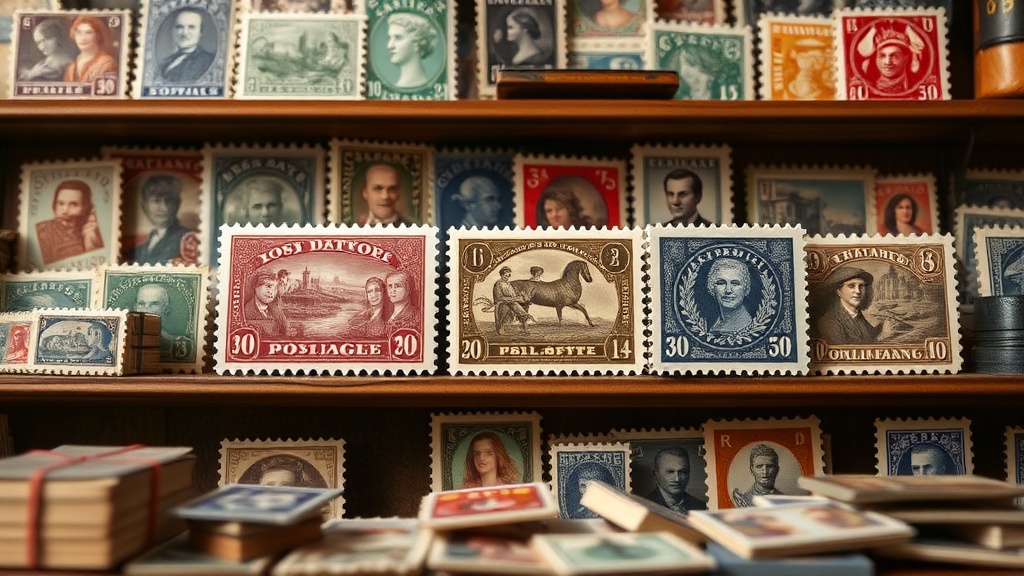
Hidden Treasures: Finding Rare Stamps at Estate Sales

Estate sales hold untapped potential for stamp collectors willing to dig through boxes, albums, and forgotten desk drawers. This post covers where to look, what to watch for, and how to evaluate stamp collections found in estate sale environments—plus practical strategies for negotiating, authenticating, and adding genuine rarities to a collection without overpaying.
What should you look for when buying stamps at estate sales?
Focus on three categories: complete albums, loose collections in original packaging, and correspondence with intact postage. Complete albums—especially those from established publishers like Scott, Minkus, or Harris—often indicate a collector invested time and money into the hobby. Loose stamps in glassines, stock books, or dealer approval cards suggest someone actively traded or purchased from philatelic sources. Original correspondence with stamps still attached? That's where the real surprises hide.
The condition of the storage materials matters more than most beginners realize. Stamps jammed into cheap photo albums with acidic paper backing—they're likely damaged. Collections housed in proper stamp albums with archival-quality mounts? Worth a closer look. Mold, mildew, or evidence of water damage usually means the stamps suffered too.
Here's the thing about estate sale pricing: it's often arbitrary. A $5 sticker on a shoebox full of stamps might represent a lifetime collection—or complete junk. The reverse happens too. That pristine 1847 5¢ Benjamin Franklin in a fancy frame? Could be a common reprint worth pennies, priced at $200 because "it looks old."
Worth noting: estate sale companies rarely employ philatelic experts. They're liquidating household goods, not conducting auctions. This creates opportunities for collectors who know what they're doing—and traps for those who don't.
How do you identify valuable stamps in a rushed estate sale environment?
Bring a pocket stamp catalog (the Scott Standard Postage Stamp Catalogue is the industry standard), a quality magnifier (10x minimum), and a portable UV light for checking phosphor tagging and watermark detection. Smart phone apps like Stamp Identifier or sites like StampWorld provide quick reference when time pressures mount.
Start with the obvious indicators. Perforation gauge matters enormously—the same design with different perforations can range from common to five figures. Color shades, especially on classic U.S. issues, separate ordinary stamps from prized varieties. The 1¢ Franklin blue? Common. The 1¢ Franklin ultramarine? That's a different conversation.
Look for these specific markers that suggest value:
- grill patterns on early U.S. issues (tiny embossed dots visible under magnification)
- overprints and surcharges — especially on foreign stamps from political transition periods
- inverted centers or frames on bi-colored stamps (the famous Inverted Jenny is just the most dramatic example)
- perforation varieties — coil stamps with straight edges, imperforate errors, or syncopated perfs
- gum condition on unused stamps — original gum, never hinged (OG NH) commands significant premiums
The catch? You won't have hours to examine every stamp. Estate sales operate on compressed timelines. Develop a triage system: quick visual scan for condition, rapid check for catalog presence, then deeper examination of anything that passes both filters. Pass on stamps stuck to paper with non-philatelic hinges (tape, glue, staples)—the damage usually exceeds any potential value.
Where are the best places to find stamps hidden in estate sale homes?
Stamps hide in predictable patterns once you know the collector psychology. Start in the home office or study—desk drawers frequently contain small stock books, dealer approvals, or correspondence files. Check the closet shelving for labeled boxes ("Stamps," "Letters," "Grandpa's collection"). Attics and basements hold the bulk collections: shoeboxes, cigar boxes, and old cookie tins stuffed with loose stamps.
Don't ignore the forgotten spaces. That tin cookie box on the garage workbench? Could hold a dealer's remaining inventory. The cedar chest in the guest bedroom? Might contain a grandmother's saved correspondence from the 1930s—complete with commemorative first day covers and airmail varieties.
Bookshelves deserve systematic attention. Non-philatelic books sometimes function as stamp presses—collectors stored heavy volumes atop albums to keep stamps flat. Check inside hollowed-out books (it happens more than you'd think) and between the pages of magazines from stamp-collecting eras.
Here's a practical search priority list for time-pressured estate sale visits:
| Location | What You'll Find | Value Probability |
|---|---|---|
| Home office desk drawers | Stock books, dealer approvals, recent purchases | Moderate to High |
| Closet shelves (labeled boxes) | Organized collections, album sets, supplies | High |
| Attic storage | Bulk accumulations, family correspondence | Variable (quantity over quality) |
| Basement/crawl space | Abandoned projects, water-damaged stock | Low to Moderate |
| Bedroom dressers | Personal correspondence, souvenir sheets | Moderate |
| Garage workbenches/storage | Dealer leftovers, unsorted mixtures | Low (but occasional surprises) |
That said, the highest-value finds often come from the most mundane locations. The kitchen junk drawer containing a letter from 1918 with an inverted biplane stamp. The bathroom closet with a shoebox of first day covers saved by a postal worker. Estate sales reward thoroughness—not assumption.
How much should you pay for estate sale stamp collections?
Never pay catalog value. That's rule one. Catalog prices (Scott, Stanley Gibbons, Michel) represent retail ideals—stamps in perfect condition, properly authenticated, sold by reputable dealers with return privileges. Estate sale stamps come with none of those assurances. Typical estate sale pricing ranges from 10% to 40% of catalog value for quality material, and appropriately less for damaged or common items.
Develop a quick mental pricing framework. Common worldwide stamps in mixed condition? Think cents per stamp, not dollars. U.S. commemoratives from the 1930s-1950s in nice used condition? Maybe 25-50% of catalog. Classic U.S. definitives with identifiable varieties? That's where pricing gets interesting—and where authentication becomes critical.
Negotiation works differently at estate sales than at dealer shops. Company-run sales often have set discount schedules (25% off Saturday, 50% off Sunday). Private estate sales hosted by family members allow more flexibility—especially for bulk purchases. Buying the entire collection rather than cherry-picking usually yields better per-stamp pricing, though it means absorbing significant junk to get the gems.
Here's the thing about "investment" claims you'll hear: ignore them. That collection "worth $50,000 according to the 1985 catalog" is probably worth $3,000 today—if the condition holds up. Catalog values decline for most modern material. Only classic rarities (pre-1940 U.S., select foreign issues) appreciate meaningfully. Price based on current market realities, not outdated aspirations.
How do you authenticate stamps found at estate sales?
Authentication separates expensive mistakes from genuine treasures. For stamps under $100 in potential value, self-authentication using reference materials suffices. For material exceeding that threshold—or anything appearing "too good to be true"—professional certification becomes necessary.
The Philatelic Foundation and American Philatelic Society's Expertizing Service provide authoritative authentication for U.S. stamps. For worldwide material, consider the Royal Philatelic Society London or country-specific societies. Certification costs money ($30-100+ per stamp) and takes weeks—but for valuable finds, it's non-negotiable.
Self-authentication basics every estate sale hunter should know:
- Watermark detection — Use watermark fluid (not water!) or a specialized lamp. Many valuable varieties differ only by watermark presence or type.
- Perforation measurement — A simple perforation gauge identifies coil stamps, imperforate errors, and scarce perf varieties.
- Printing method identification — Engraved stamps feel raised; lithographed stamps feel flat. Some forgeries fail this basic test.
- Color shade comparison — Compare against authenticated examples. Color alone creates valuable varieties (the 3¢ 1869 Pictorial ultramarine versus blue, for instance).
- Gum analysis — Original gum has specific characteristics: color, texture, and aging patterns. Regummed stamps—common with forgeries—show telltale signs under magnification.
Worth noting: reperforated stamps plague the market. Someone took a common imperforate stamp and added fake perforations to create a scarce "coil" variety. Check perforation alignment, gauge consistency, and whether the perforations extend into the design (a dead giveaway). When in doubt, assume reperforation—especially on high-value coil stamps.
What are the biggest mistakes collectors make at estate sales?
Rushing ranks first. Estate sales create artificial urgency—limited hours, competitive shoppers, the fear of "missing out." Smart collectors slow down. A stamp that's genuinely valuable today will still be valuable after thirty minutes of careful examination. The "steal" that disappears because you hesitated? It was probably fool's gold anyway.
Overpaying for "completeness" runs second. That beautiful, intact 1950s-era Scott album with stamps on every page? It's mostly common material with minimal resale value. Albums—especially fancy ones with detailed write-ups—create an illusion of value that exceeds the stamps themselves. Price the contents, not the presentation.
Third mistake: ignoring condition. Collectors fixate on catalog number and rarity while neglecting centeredness, perforations, and gum. A stamp cataloging $500 in fine condition drops to $50 in average condition—and might be unsaleable if damaged. Estate sale stamps often suffered decades of improper storage. Grade conservatively.
The catch with estate sale collections? Provenance matters enormously for high-value items, yet estate sales rarely provide it. That $10,000 stamp in the shoebox—if genuine—should have certification, purchase records, or at minimum, a story. Suspiciously valuable stamps appearing without context warrant extreme skepticism. The estate sale environment unfortunately attracts laundered forgeries and stolen material.
Build relationships with estate sale companies serving affluent, older neighborhoods. Philadelphia's Main Line suburbs, for instance, produce regular philatelic estates from multigenerational collector families. Companies that know you—know you're serious, pay promptly, don't cherry-pick and leave messes—will call you before sales open. That early access transforms finding percentages.
Document everything. Photograph collections before purchase. Note seller information. Keep receipts. Should authentication reveal something extraordinary—or should questions about legitimacy arise—this documentation protects your investment and establishes legitimate ownership chain.