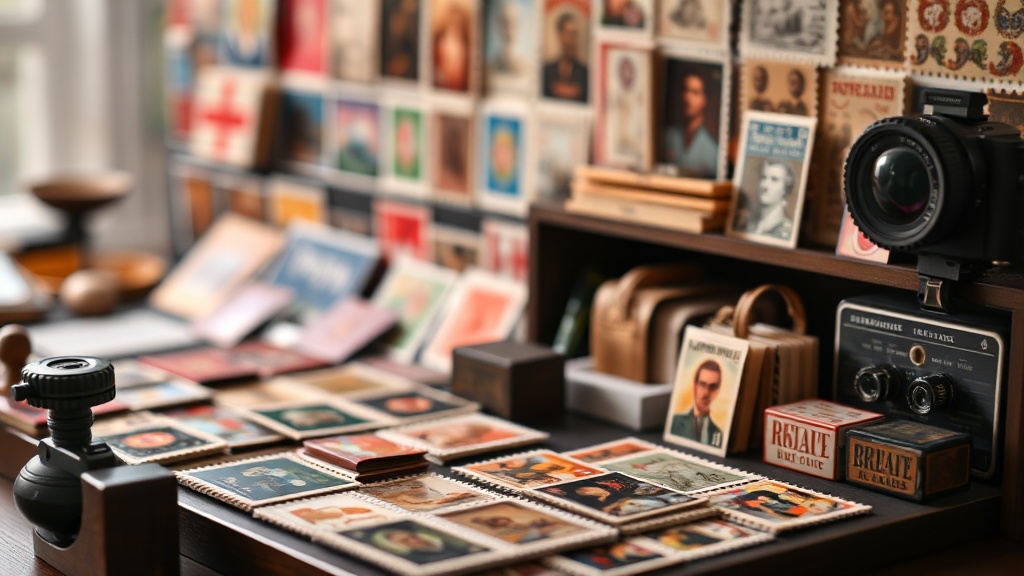
A Beginner's Guide to Starting Your Stamp Collection

What This Guide Covers (and Why Stamp Collecting Still Matters)
This guide walks through everything needed to start a stamp collection — from basic supplies and where to find stamps to organizing, storing, and valuing a growing collection. Stamp collecting remains one of the most accessible entry points into the collectibles world. Unlike bottles, caps, and smalls (which often demand significant storage space and upfront investment), stamps fit in shoeboxes. They're portable, historically significant, and there's always something new to learn. Whether drawn to Victorian-era British colonies, mid-century American commemoratives, or modern topical themes, the hobby rewards patience and curiosity without requiring a fortune.
What Do You Actually Need to Start Collecting Stamps?
Very little. A beginner needs only three items: stamps (obviously), a place to store them, and a way to examine them closely. Everything else is optional enhancement.
The basic toolkit:
- Stamp tongs — Never handle stamps with bare fingers. Oils damage paper and gum. A decent pair of Lighthouse stamp tongs runs $8-12 and lasts years.
- Stock book or album — Stock books with clear plastic strips offer flexibility for beginners. Once a collection direction emerges, specialized albums (Scott, Stanley Gibbons) provide structure.
- Magnifying glass — A 5x to 10x loupe reveals details: perforation varieties, printing flaws, watermarks. The Bausch & Lomb Coddington magnifier ($25-40) works well.
- Perforation gauge — Stamps that look identical often differ only in perforation count (the number of holes per 2cm). This $5 tool prevents costly misidentifications.
- Watermark tray and fluid — Many stamps (especially older ones) have embedded watermarks visible only when soaked in specialized fluid or placed on a dark tray.
That's it. You don't need UV lamps, micrometers, or expensive catalogs on day one. Buy tools as the collection grows — not before.
Where Do Beginners Actually Find Stamps?
Multiple sources exist, each with trade-offs. Here's the thing: most beginners overpay at the start because they don't understand these differences.
| Source | Best For | Watch Out For | Average Cost |
|---|---|---|---|
| Dealer approval books | Building specific countries/themes | Overgrading common stamps | 10-50¢ per stamp |
| eBay lots (kiloware) | Bulk accumulation, sorting practice | Damaged, heavily duplicated material | $5-20 per pound |
| Estate sales | Older collections, hidden gems | Paying collection prices for junk | Highly variable |
| Stamp shows (bourses) | Seeing stamps in person, learning | Dealer intimidation factor | Competitive |
| Family collections | Free starter material, provenance | Sentimental overvaluation | Free |
The catch? Kiloware — those unsorted piles sold by weight — teaches more than expensive individual purchases. Handling thousands of stamps builds pattern recognition. You'll spot perforation differences, paper varieties, and cancels without conscious effort. Worth noting: many dealers at shows love talking to beginners. Ask questions. The education is free even if you don't buy.
What Types of Stamps Should Beginners Collect?
Whatever sparks genuine interest. The hobby fragments into countless specialties — and that's the beauty of it. Common starting points include:
By country: United States and Canada dominate English-speaking markets. British Commonwealth stamps (India, Australia, South Africa) offer historical depth and relatively affordable classics. European countries like Germany and Italy provide complexity without breaking budgets.
By era: Classic stamps (pre-1940) carry premium prices but historical weight. Modern commemoratives (1950-present) remain accessible, colorful, and often personally meaningful. Post-1990 material? Generally overproduced and holds little value — though perfect for learning.
By topic (thematic collecting): Space exploration, railroads, birds, lighthouses, famous people. Topical collectors hunt stamps across countries and eras united by subject. A space-themed collection might include Soviet Sputnik commemoratives, Apollo moon landing stamps, and modern James Webb telescope issues from dozens of nations.
Postal history: Covers (envelopes with stamps and postmarks) tell stories. A Civil War-era cover with a soldiers' letter. A 1930s airmail envelope carried by early transatlantic flights. These pieces connect stamps to actual human experience.
Start narrow. Pick one country or one theme. Exhaust that area before expanding. Scattered accumulations of random stamps rarely develop into satisfying collections.
How Should You Organize and Store Stamps?
Proper storage prevents the deterioration that ruins value. Stamps are paper — vulnerable to light, humidity, temperature swings, and improper materials.
The environment matters: Store collections in living spaces, not attics or basements. Relative humidity between 35% and 55% prevents mold and gum damage. Temperature stability matters more than the exact degree — constant 75°F beats fluctuating between 60°F and 80°F.
Materials to avoid: PVC plastic (the cheap, shiny sleeves found at office supply stores) releases chemicals that destroy stamps within months. Rubber cement, tape, and ordinary glue doom stamps to damage. "Regular" paper contains acids that yellow over decades.
What actually works:
- Mylar or polyester sleeves (inert, chemically stable)
- Lignin-free, acid-free album pages
- Hingeless mounts for mint stamps (protects gum)
- Bankers boxes for cover collections
- Climate-controlled storage for truly valuable material
Organization depends on collection type. Country collections typically follow catalog numbers (Scott, Stanley Gibbons, Michel, Yvert — the "Big Four" catalogs each serve different markets). Thematic collections need custom organization: chronologically, geographically, or by sub-topic. Whatever system chosen, maintain an inventory. Simple spreadsheets work. Specialized software like StampManage or Colnect (free) tracks values, sources, and condition notes.
How Do You Know What Stamps Are Worth?
Most stamps are worth very little. That 3¢ Liberty from 1954? Millions printed. Worth face value at best. The hobby requires recalibrating expectations.
Catalog values (Scott Standard Postage Stamp Catalogue, Stanley Gibbons, etc.) represent retail prices for stamps in perfect condition — not what you'll get selling. Actual market value runs 10-30% of catalog for common material, 50-70% for scarcer items, sometimes exceeding catalog for genuine rarities.
Condition drives everything:
- Centering — Perfectly centered stamps command premiums. Off-center examples of the same stamp might be worth half or less.
- Perforations — Intact, undamaged perforations matter. "Short perfs" or pulled perforations significantly reduce value.
- Gum condition — For mint stamps, original undisturbed gum (OG) with no hinge remnants (NH, never hinged) doubles or triples value over hinged examples.
- Cancels — Used stamps need readable, neat cancels. Heavy smeared cancels, pen marks, or "killer" heavy bars destroy appeal.
- Faults — Thins, tears, creases, rust spots, and repairs render stamps virtually worthless for investment purposes — though still valid for study collections.
Grading services exist (Professional Stamp Experts, Philatelic Foundation) but aren't necessary for beginner material. Learn to assess condition yourself through comparison and expert examination at shows.
Common Beginner Mistakes (and How to Avoid Them)
Everyone makes mistakes. The goal is making inexpensive ones while learning.
Chasing "investment grade" stamps too early. Speculative buying of rare stamps without expertise leads to overpaying for forgeries or repaired stamps. Build knowledge first. Investment returns come later, if at all.
Ignoring condition. A collector once showed a "valuable" 19th-century stamp worth $500 in catalog. Close examination revealed a repair, thin spots, and regummed back. Actual value: $40. The $5 saved buying a "bargain" cost $455 in value.
Soaking stamps off paper incorrectly. Modern self-adhesive stamps (1990s-present) use different adhesives than traditional water-activated gum. Soaking self-adhesives in water often ruins them. Collect modern issues on envelope pieces or use specialized stamp lifting products.
Buying "mystery" collections without examination. That shoebox at the estate sale marked "Rare Stamps $200" usually contains common definitives worth $15. The exception proves the rule — but verify before purchasing.
Neglecting philatelic literature. Stamps exist within historical, political, and technological contexts. The Smithsonian National Postal Museum offers free online resources. Specialized handbooks for particular countries or topics deepen appreciation and prevent identification errors.
What's the Next Step?
Start today. Find five stamps that interest you. Arrange them. Examine them under magnification. Research one. Join a local stamp club — the American Philatelic Society maintains a directory. Attend a show. Subscribe to a stamp publication (Linn's Stamp News for general collecting, specialized journals for focused interests).
Stamp collecting rewards the curious. Every stamp carries stories — of postal systems, printing technologies, historical events, artistic movements. The beginner who approaches the hobby as education rather than investment discovers something more valuable than catalog prices: a lifelong source of intellectual engagement and the quiet satisfaction of organized, purposeful accumulation.